I can dream of what the ocean’s depths might smell like, but I will never know. I might imagine the shape of flames on the sun’s surface but to watch them burn would blind me. There are few human beings who can bring the unknowable tantalizingly close. Like a medium, Japanese artist Sari Sui unearths the essences that make up our complex, inexplicable world. Her work, in scents, drawings, and paintings, appeared to me by chance, without planning.
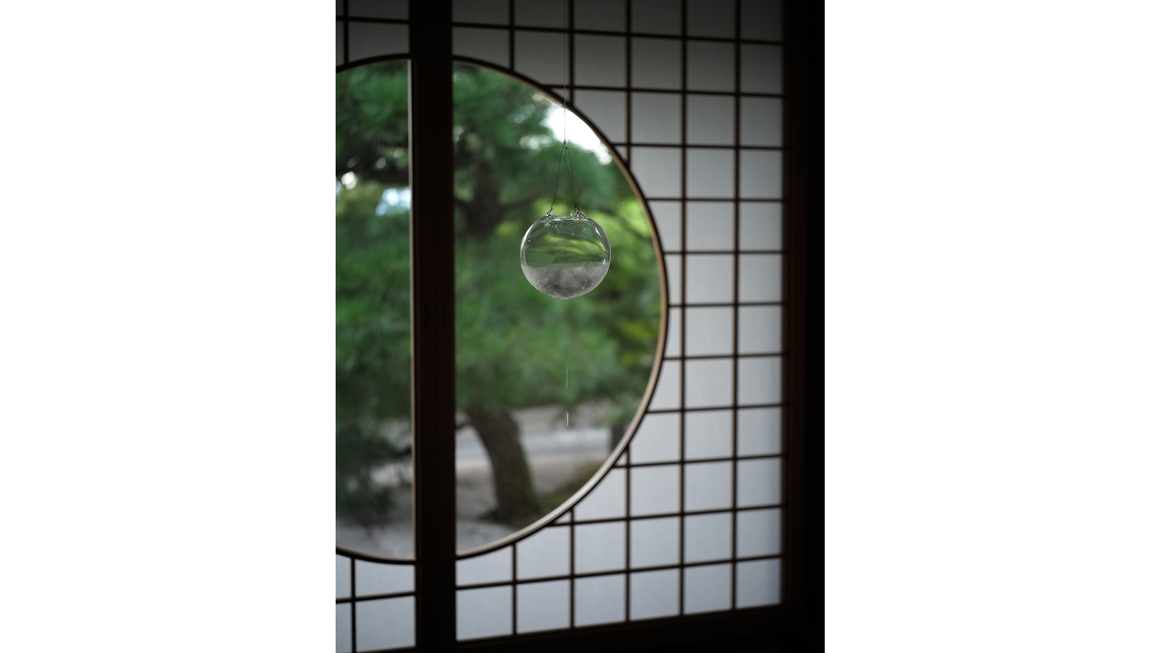
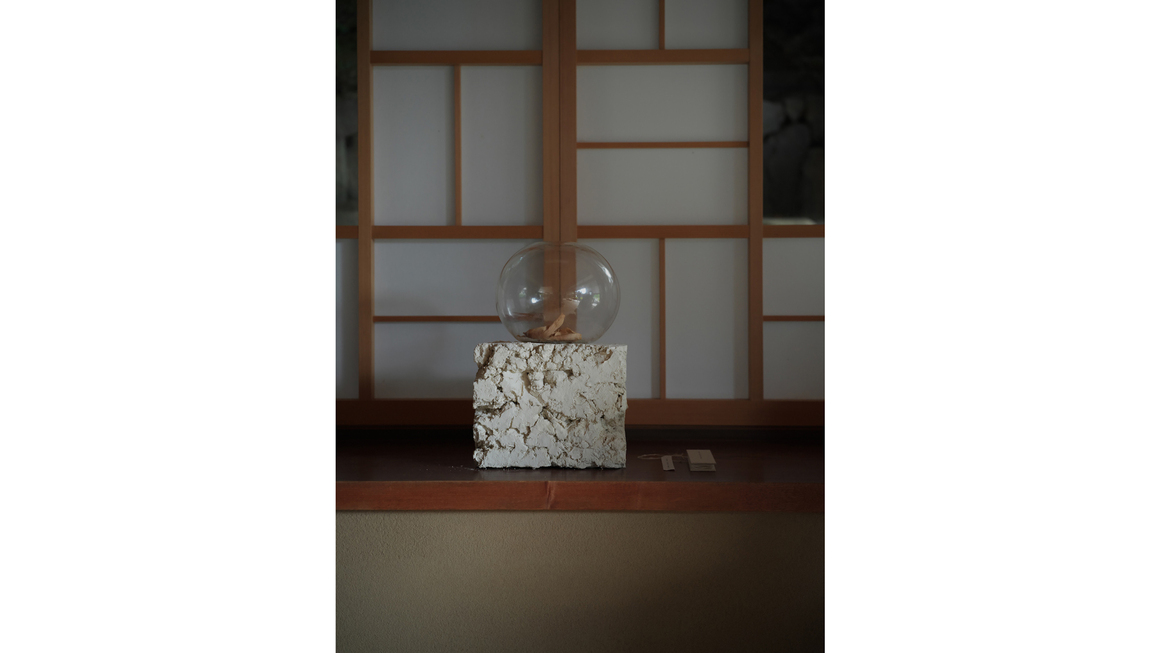
One day in mid-October, I walked up the incline of a quiet Kyoto street. At its end was a sub-temple of Tōfuku-ji. Built in 1391, Kōmyō-in has been maintained for centuries by Buddhist monks. Unlike Tōfuku-ji, which attracts crowds every year, Kōmyō-in is peaceful year-round. Like much Japanese devotional architecture of the Muromachi period, the temple unfolds around a garden, integrating the natural world and the man-made. Off the stepped entry, in a room that overlooked the temple’s front garden, glass cloches protected scents of Sui’s design.
I sniffed several scents, and as I did past lives came rushing in. “From quartz, a mineral that forms part of [Awaji] island’s ancient geology, Sari extracted a scent distilled from the memory of stone,” explained the installation’s accompanying text. Sui excavated layers of sediment and pressure and purpose looking for a marker of time that bridged human and divine. She uses only natural ingredients from the world surrounding her, extracting each essence and combining them intuitively. When worn, her finished scents reintegrate their wearers into the natural world. Her approach is extremely personal, like scent itself.
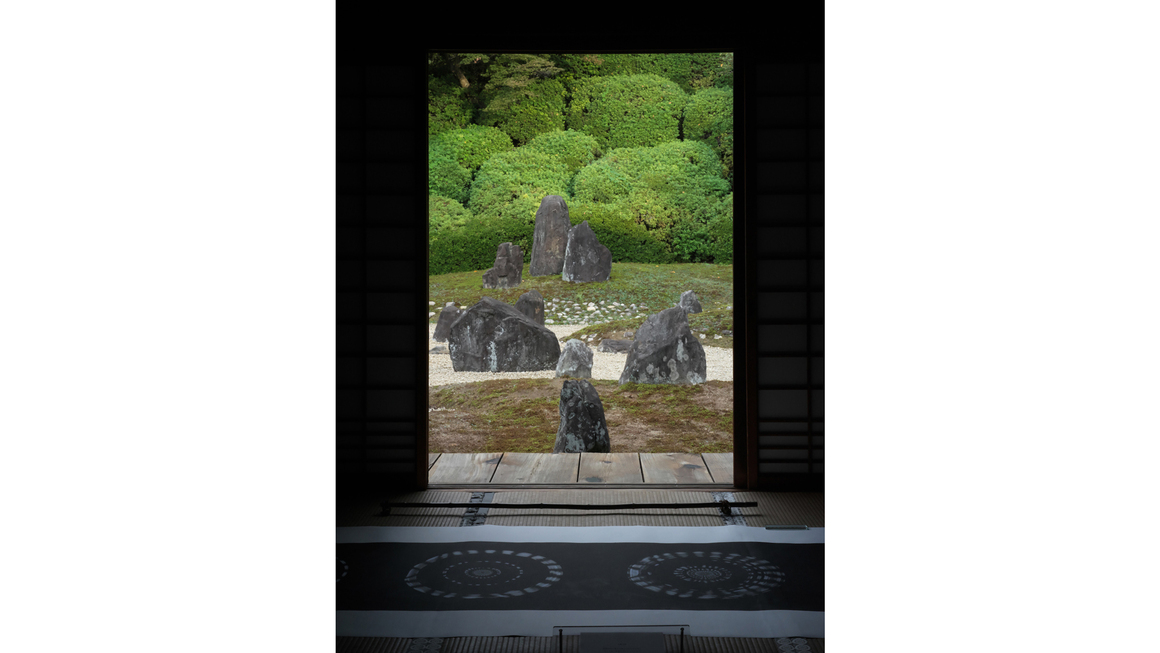
The rocks that dot Kōmyō-in’s gardens are similarly loaded. In 1939, they were chosen and placed throughout gravel and mounds of moss by landscape master Shigemori Mirei. Three arched rocks represent the Buddha. Radiating out from these figures run lines that Sui has drawn and maintained in the gravel over the last year. The garden is a static sea.
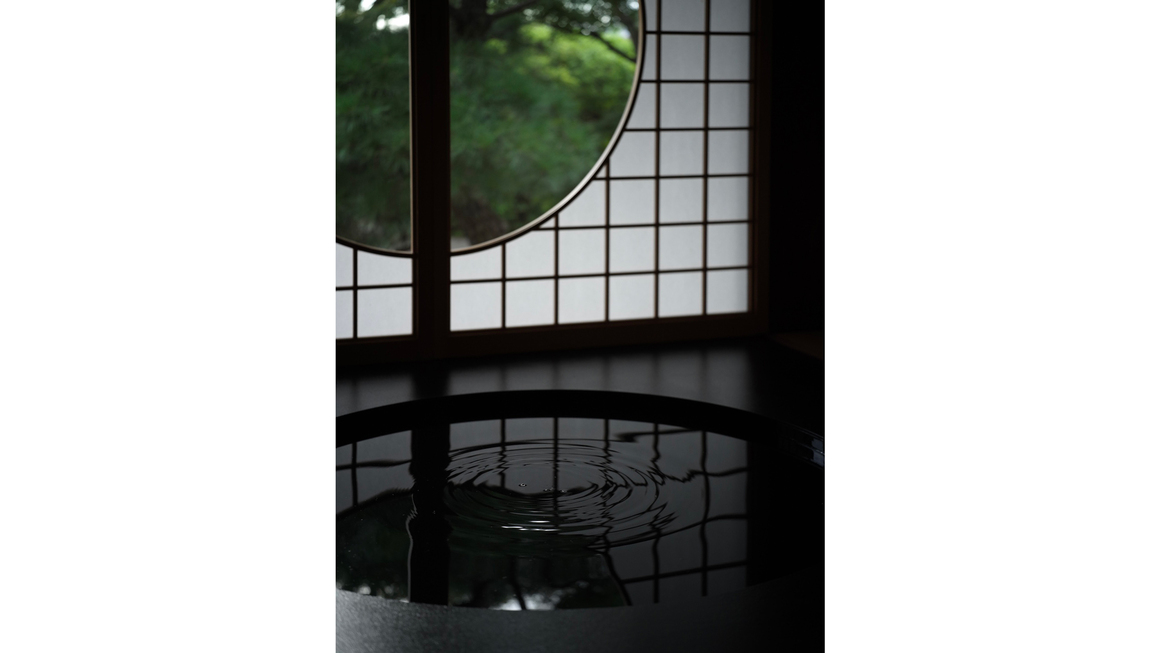
Back inside, another room tucked away from the garden centered around movement and transformation. Suspended over a circular pool of water in the room’s center hung a glass orb of ice. Every ten seconds, condensation from the ice melted to form a single drop. That drop would fall and create a cascade of ripples that expanded towards the pool’s edge, becoming less pronounced until they disappeared altogether. And, just as the water quieted, a new drop fell: the circle of life.
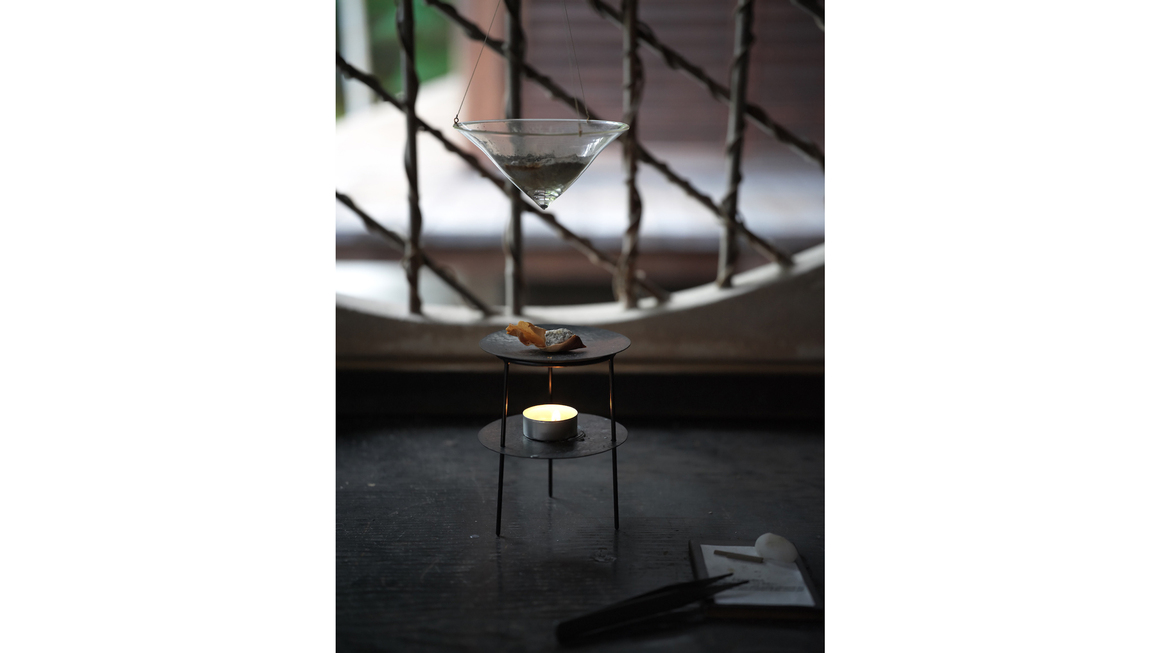
Farther into the temple another room offered incense with instructions to burn them. A short written message of Sui’s encouraged focus as solid turned to smoke. In the deepest chamber of Kōmyō-in, Sui arranged a series of upturned glass orbs holding scents in a line. Again, written accompaniments grounded visitors in what it was they were smelling. Ingredients both concrete and poetic, like soil, silt, and precious stones, combined to make scents that were worlds unto themselves. Primordial Circle I, a concoction of pearls from the Biwa lake and silt from its floor, smelled like eons spent floating in the deepest body of water.
As we met, Sui told me of her teachers: the moss, the rocks, the soil, the rain. She spoke and salt-filled tears formed in my eyes: more of her magic, a shared, sensory experience, evoking the divine.
Camille Okhio is a New York–based arts and design writer and historian.
Related Stories