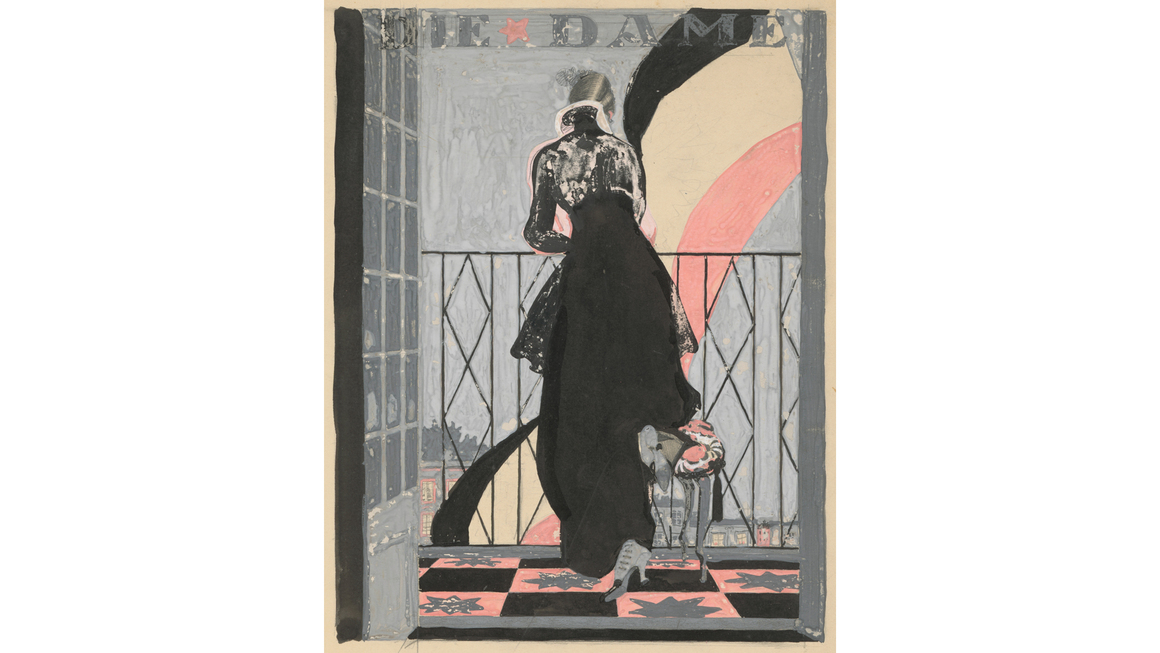
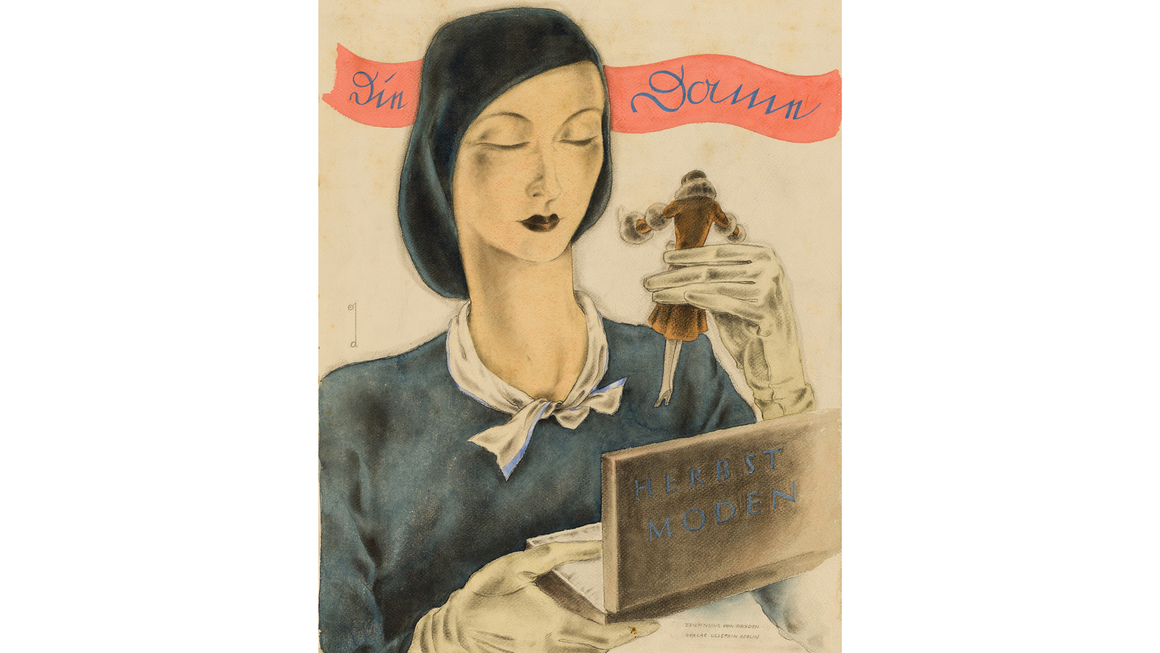
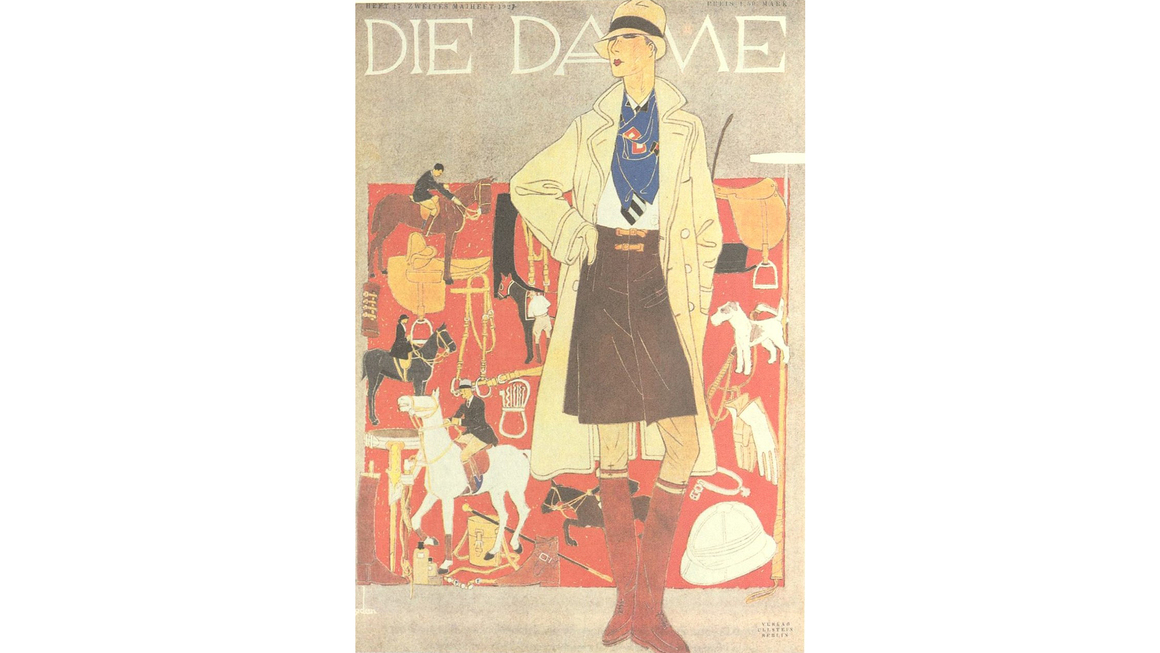
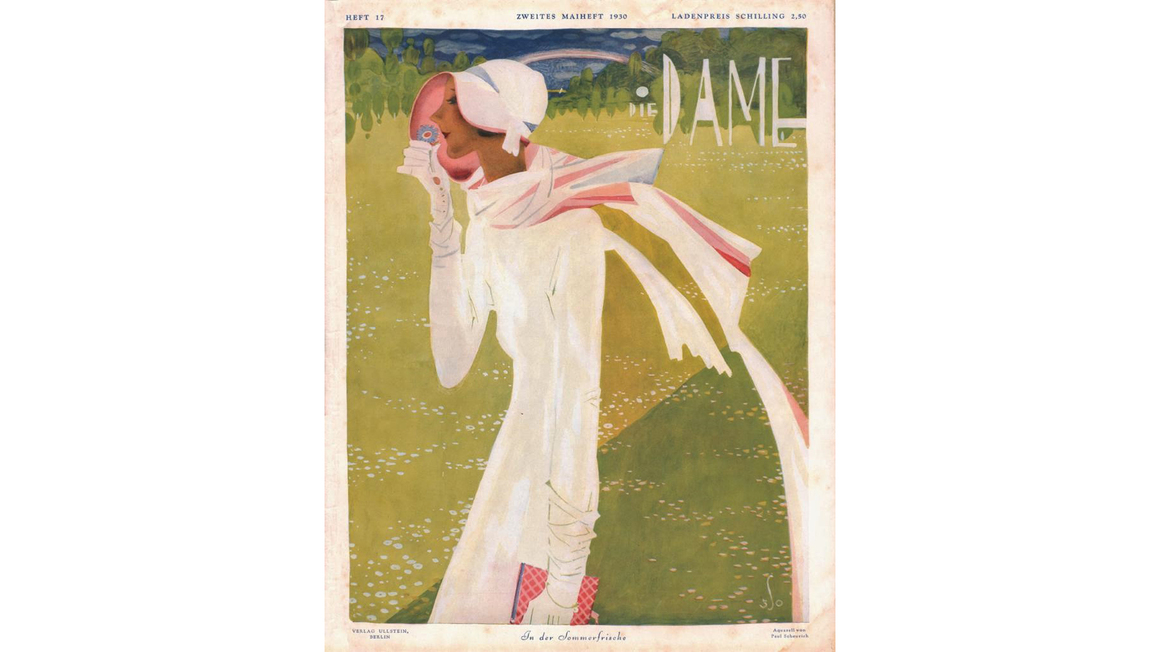
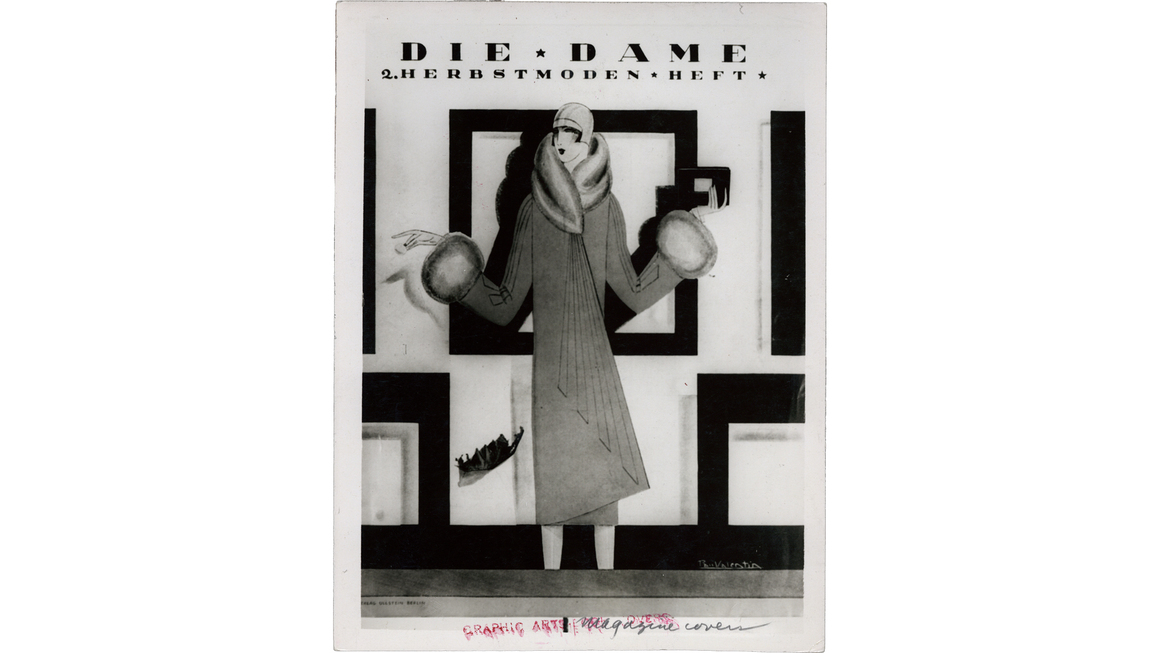
Almost all the women on the 1920s covers of the German magazine Die Dame sported bobbed hair, fashionably sleek outfits, and cloche hats. Some were portrayed gossiping over cocktails with equally chic friends, or boarding a Berlin–Paris train. Others were depicted laden with expensive hat boxes or driving through the countryside in glamorous cars. There were also images of women dancing and enjoying favourite sports such as skiing, tennis, swimming, or waterskiing.
Those covers helped Die Dame to champion a new type of woman: confident, adventurous, ambitious, independent, and fabulously stylish. Tellingly, in a bold departure from the conventional editorial practices of magazine publishing in Germany, and other countries at the time, Die Dame’s staff included talented young female editors, writers, designers, and illustrators, who looked and dressed like its dazzling cover stars.
Die Dame was launched in 1912 by Ullstein, a successful Berlin publishing house founded by in 1877 by the Jewish entrepreneur Leopold Ullstein. After his death in 1899, the business was run by his five sons, all of whom had worked alongside him. They proved to be just as smart as their father in anticipating how social and economic changes could fuel demand for new types of newspapers and magazines, and how Ullstein might benefit from advances in printing technology.
By 1912, Ullstein already owned Germany’s bestselling newspaper and picture paper, and had launched its first tabloid. The brothers had also identified a gap in the market for a publication targeting women and introduced Illustrirte Frauen-Zeitung in 1911 as an illustrated newspaper offering advice on homemaking. The following year, they reinvented the format to appeal to younger, more fashionable and sophisticated readers, under a new name, Die Dame.
The launch of a daringly new editorial concept two years before World War I was not ideal, but having survived the conflict, Die Dame thrived in the glamour and dynamism of the 1920s. Many young women in Europe and North America had been empowered during the war, when they took on jobs previously reserved for men, who had been conscripted into the military. These women entered the 1920s determined to preserve their financial independence by exercising their hard-won voting rights and defining dynamic new personal identities, notably by wearing the sportily chic looks they admired in Die Dame.
Among them were Die Dame’s employees, such as the redoubtable fashion editor Johanna Thal, who championed fashion as a tool of emancipation. The fashion writers included Helen Grund, whose lovers’ triangle with her husband Franz Hessel and his best friend Henri-Pierre Roché inspired the latter’s 1953 novel, Jules et Jim, and François Truffaut’s subsequent film. Another star writer was Vicki Baum, whose bestselling 1929 book, Menschen im Hotel, was adapted into a 1931 Broadway play and 1932 Oscar-winning movie as Grand Hotel. The design team included a gifted young graphic designer, Elisabeth Friedländer, who went on to become the first woman to create a complete industrial typeface.
But by the end of the 1920s, the Ullsteins had succumbed to political pressure to make Die Dame more conservative. This was reflected in its editorial content and workforce, notably when some of its most accomplished female staff were replaced by men. After years of attacking the Ullsteins in its repression of Jewish business owners, the Nazi Party eventually seized control of the company and Die Dame closed in 1943.
By then, Grund, Baum, Friedländer, and many of their Die Dame colleagues had fled from Germany to avoid Nazi persecution and were building new lives in other countries. Thal did so too but, tragically, moved with her family to Vienna, and was arrested after Nazi Germany completed the annexation of Austria. She and her husband were dispatched to the Theresienstadt ghetto, a way station to Nazi concentration camps. Her husband died there, and the remarkable Johanna Thal was subsequently sent to Auschwitz, where she was murdered.
Alice Rawsthorn is a London-based writer on design. Her books include Hello World: Where Design Meets Life published by Hamish Hamilton, Design as an Attitude published by JRP|Ringier, and, most recently, Design Emergency: Building a Better Future, co-written with Paola Antonelli and published by Phaidon. She and Antonelli are co-founders of the Design Emergency podcast
Related Stories