On the harbor side of Eastern Point in Gloucester, Massachusetts, over forty rooms arranged like a game of dominoes constitute a house called Beauport. A modern visitor might assume this structure took shape over multiple generations. However, the home-turned-museum was created in just under thirty years, from 1907 to 1934, the sole work of its builder and first resident, Henry Davis Sleeper. It’s a relic from a singular mind and a very specific time—caught between Edwardian maximalism and World War II—and an expression of the breathless passion for invention and individuality that marked the beginning of the 20th century. I have been to Beauport three times and, on each visit, I have been intensely struck by the emotional resonance of Sleeper’s house—that of an elusive figure, famous in his time but with an inner life that remains hidden.
The creation of Beauport was, in many ways, an act of assemblage. Sleeper, an advocate of the burgeoning American preservation movement, integrated salvaged materials, fragments of buildings slated for demolition, and even entire rooms into one discrete building. In this amalgamation, the house became the sum of myriad memories and fantasies, illusions and allusions, histories and historiographies. Its richness lies in its ability to express those varied influences through the material and spatial medium of decor.
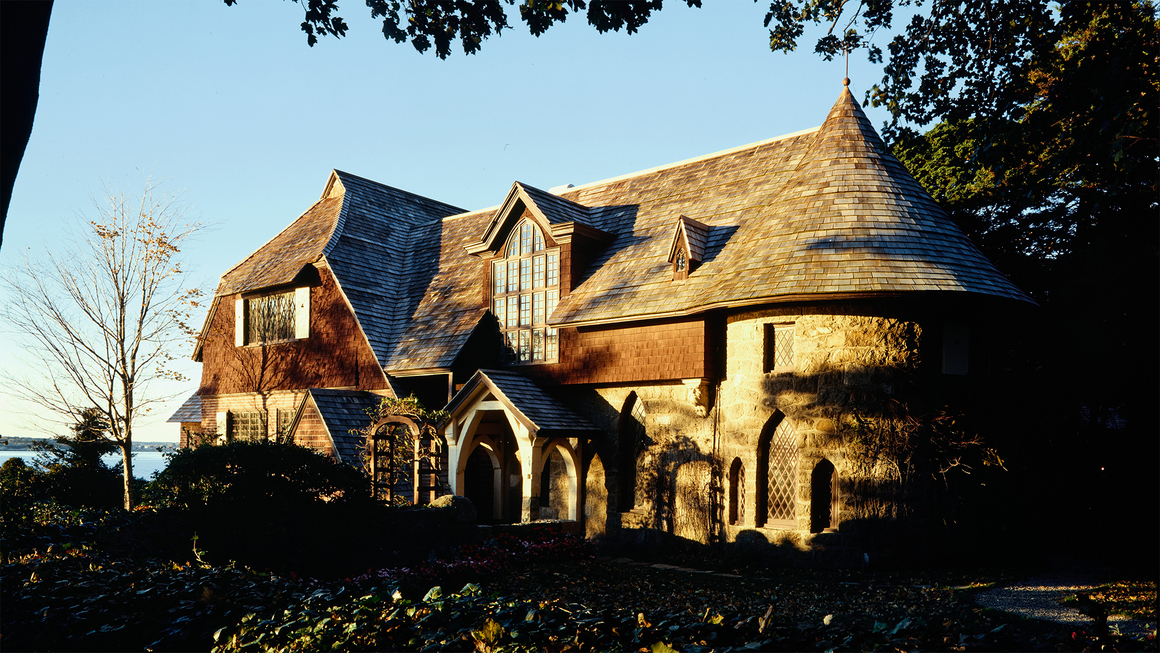
From the front garden, the house’s exterior appears as a romantic bric-a-brac jumble. Charming references to a smattering of historical buildings and architectural movements are shrunken to scale and dot the facade. Sleeper, though not a trained architect, masterfully manipulates spatial illusion to suggest a vast pile stretching into the distance (while the house is large, it is no English manor). This enthusiastically chaotic facade is an outward expression of an even more lawless floorplan. Inside, rooms burst, barrel, and contract into more rooms, each dedicated to a unique theme, collection, or palette, while outside, the joints between these disparate spaces are on full display. Beauport’s architecture is projected from its interior outward, and the facade celebrates this almost-mannerist approach.
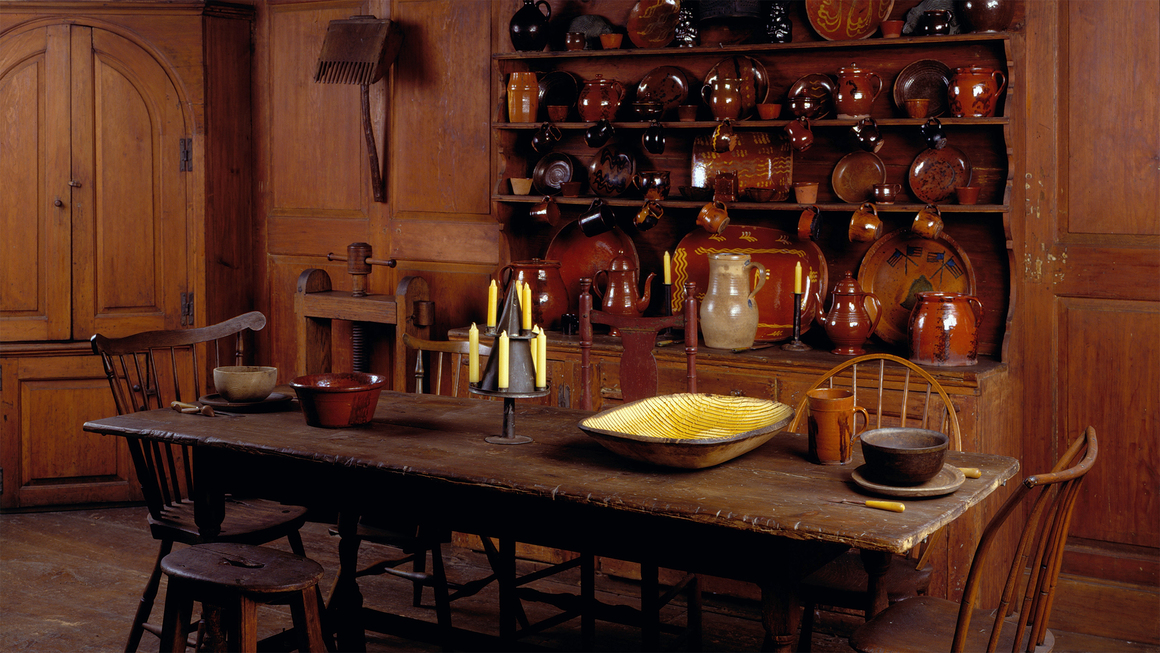
The conceptual essence of Sleeper’s project is most acutely realized in the Pine Kitchen. Frequently published and referenced in its day, the Pine Kitchen is perhaps the reason why Sleeper is credited with starting a nationwide trend for pine-paneled rooms, though none could rival the Borgesian drama of the original. In 1910, Sleeper learned that the 1628 ancestral home of his mother’s family was slated for demolition, and he leapt to rescue what he could. He salvaged a cache of paneled doors that became the material for this room. With the doors lined up one after the other to create a Frankensteined colonial boiserie, the wood’s surface is, on close inspection, riddled with holes, once made for locks and knobs that had been removed. How fitting that Sleeper should enclose a space with these former portals, contrasting the walls’ solidity with their original purpose in a Freudian scramble of identity, creation, and architectural memory.
Beauport is filled with transitional spaces like vestibules, antechambers, passageways, halls, and pantries. One might assume that in piecing together his salvaged interiors, Sleeper was forced to use these little rooms as connective tissue for his fragmented architectural fantasies. But what if these liminal spaces were central to the point he was trying to make? With each space having its own scheme or adorned with cohesive collections, the architectural experience of Beauport is fueled by these deliberately handled linkages. They are an inescapable and essential part of moving through the home.
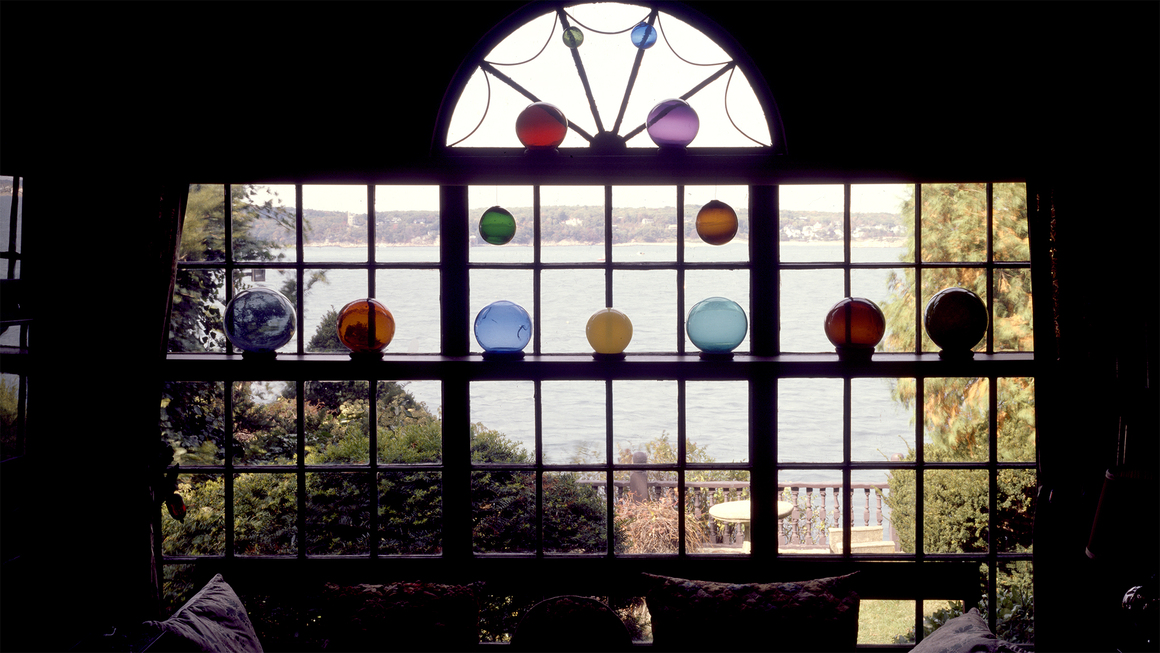
This amorphousness of these spaces is theoretical and literal. For example, Sleeper often employed translucent glass in these interstices. While some of the glass is architectural, hundreds of candlesticks, orbs, and vessels in all colors serve as vehicles for light. Memorably, Sleeper frequently used glowing displays of colonial and colonial-revival glass set on shelves in front of windows that face other rooms and light shafts, blurring the boundaries between them. Sleeper brilliantly harnessed the power of translucency, giving life to his crystalline collection and illuminating interior zones that may have otherwise been dark.
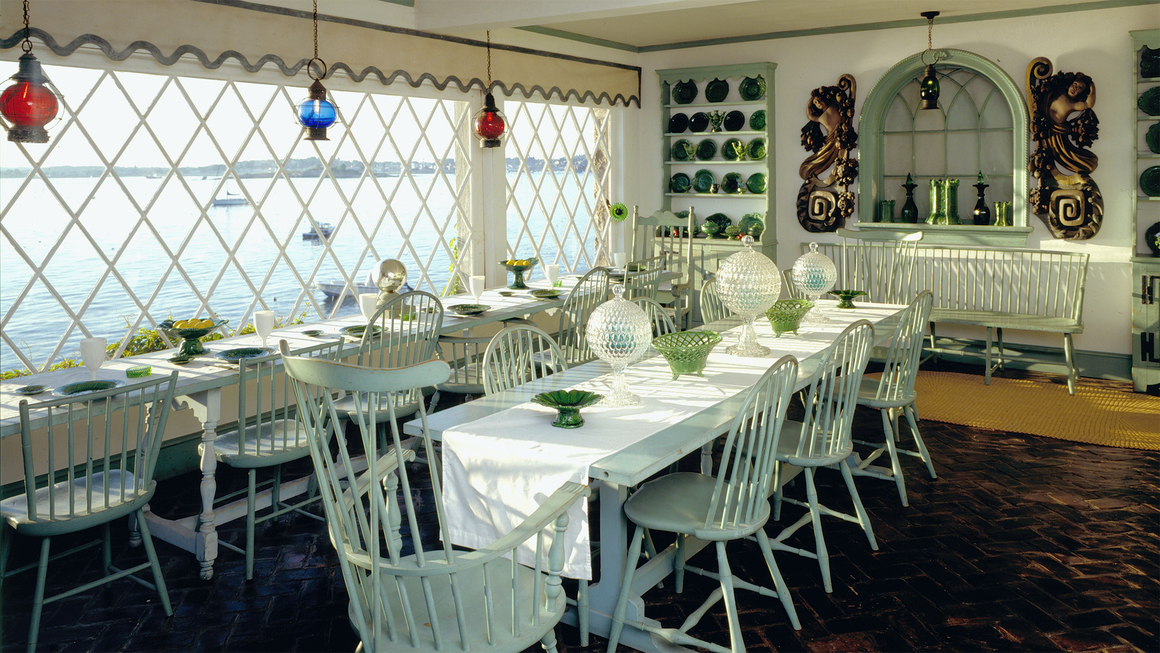
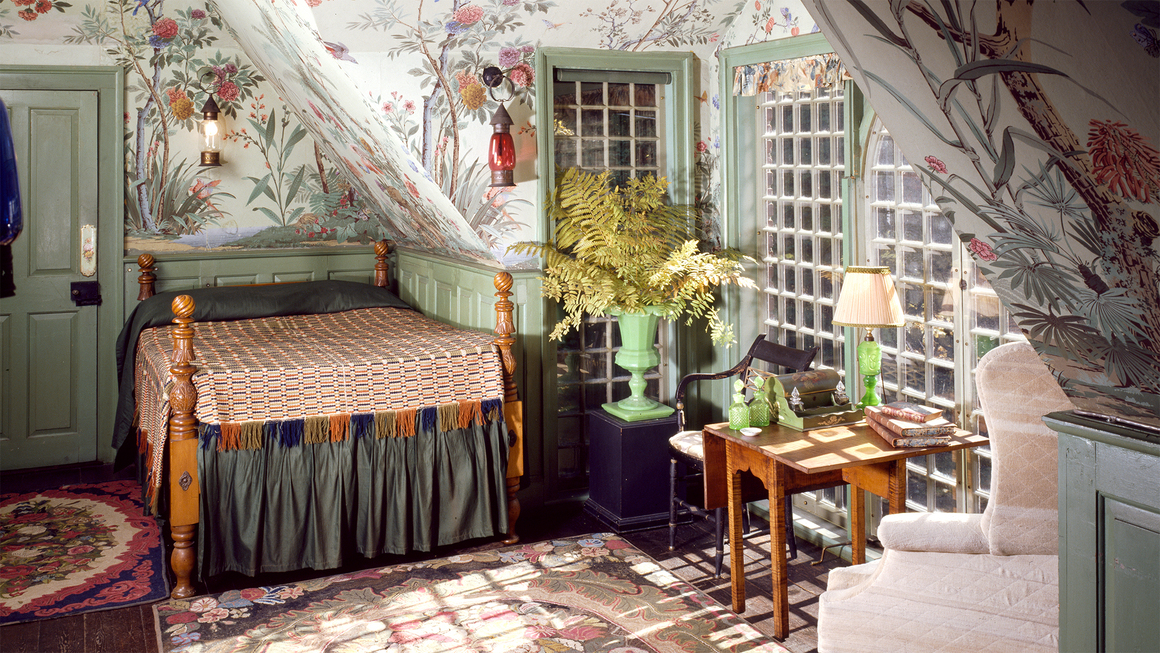
The Belfry Chamber, a bedroom on the the third floor of Beauport whose complex intersection of angled eaves was once referred to as the “polyhedral nightmare,” was enveloped by Sleeper in a floral wallpaper from Zuber et Cie. He cut and reassembled the block-printed paper soulfully, at times dissolving the contours of the room with its pattern and at others accentuating them. Elsewhere in the house, such as the octagonal dining room, he used a single color to entirely bathe the complex geometry, simplifying the cognitive experience for the visitor by obscuring the many corners with monochromatic aubergine. The manipulation of both pattern and solid color to build up and break down space is, for me, one of the most poetic and profound examples of Sleeper’s unique brand of architecture-decor.
Each time I leave Beauport, I find I am unable to recall precisely how I got from one room to another or how any of Sleeper’s ideas fit together. But, with great clarity, the beauty of my experience remains with me, his house flooding my mind with associations that are as aesthetic as they are emotional. This is the lesson he has left us in the form of a house: Home explodes from within.
Adam Charlap Hyman is the cofounder of Charlap Hyman & Herrero, an architecture and design practice out of New York, Los Angeles, and Mexico City. A contributor to CULTURED at HOME, Town & Country Magazine, and Holiday Interiors & Gardens his projects have recently been seen on the covers of Architectural Digest and Elle Decor, among others.
Related Stories