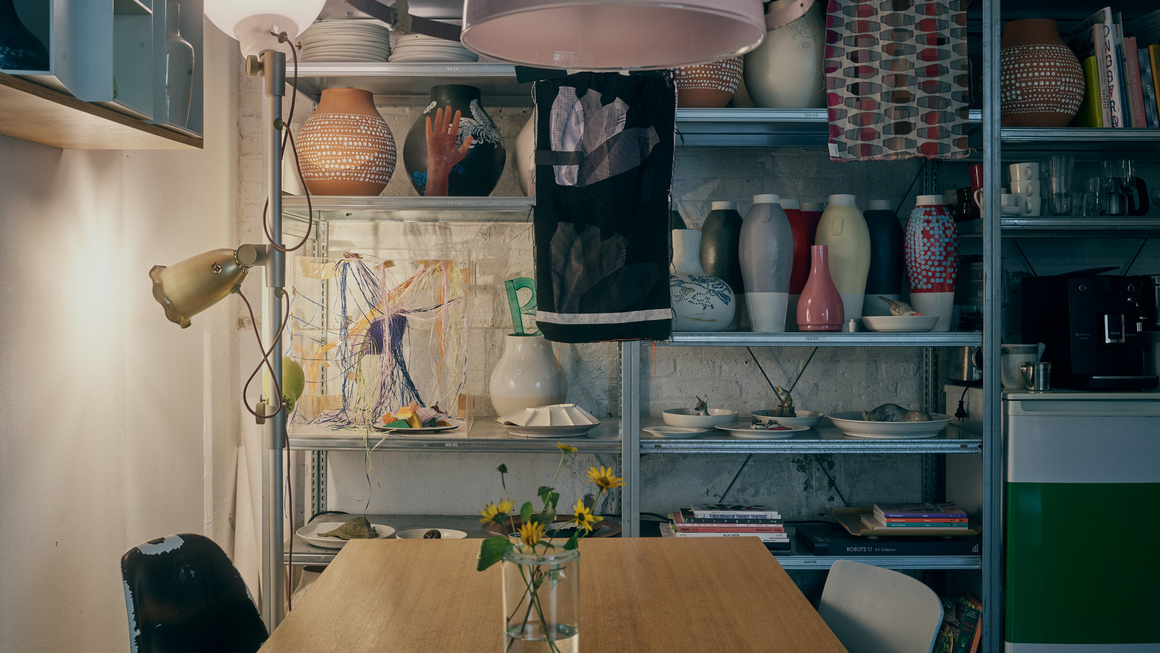
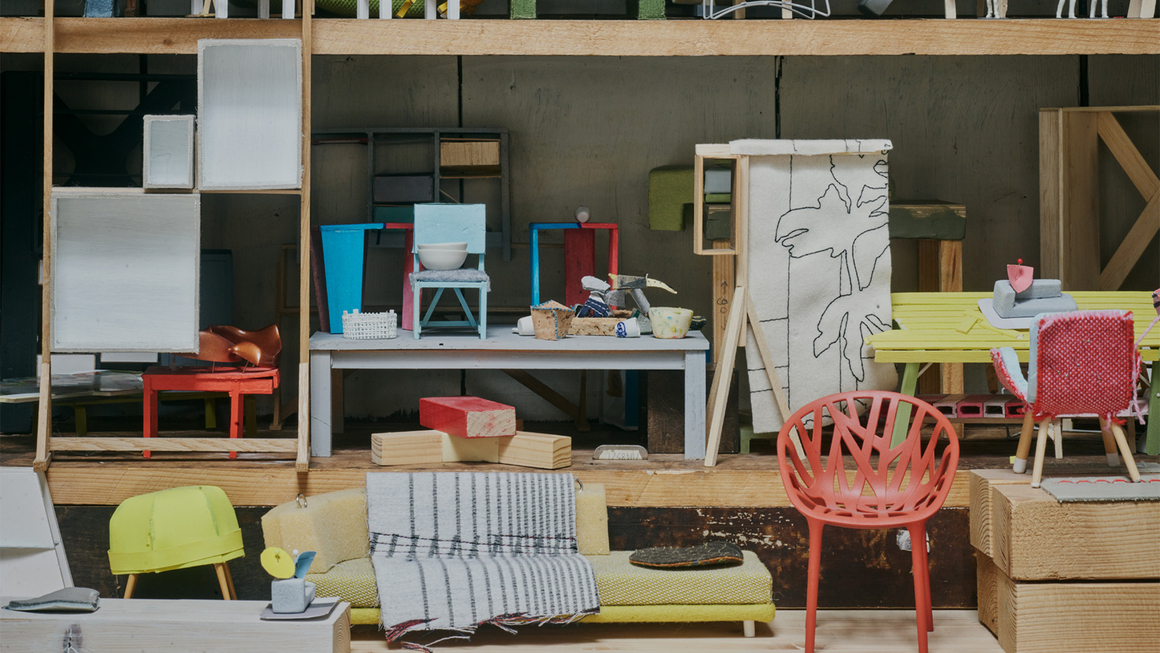
“Design is sociology. The profession is essentially about people and how they relate to the world, not about isolated products for the market.” According to designer Hella Jongerius, we tend to overlook the function of everyday things in our lives. She sees them as “intermediaries” that enable relationships between people and the world around them.
Ideally, people develop a close bond with their things, almost as if they were living creatures, because they feel at home with their carpet, table, chair, sofa, or even the textile that covers the sofa. When we’re at home with the objects that surround us, it means that we feel love for them and want to nurture that love. “For me, the great potential of design resides in the quality of the care for things.”
Which products do people love? Which products do they want to care for, even when they begin to show signs of wear and tear? According to Jongerius, these are products that carry layered narratives, like memories of the moment of giving or the motives of the giver, knowledge of the effort it took to acquire a valuable piece, or recollections of a special event, when an object served as a silent witness. “A decorative surface becomes part of a person’s visual memory. I can still draw the wallpaper in my childhood bedroom, and I vividly remember the fabric of my father’s chair.”
Naturally, a designer has no control over these associations, which are formed through life’s coincidences. A hideous, cheap trinket can have great value if given by a lover! But what a designer can create are products that are highly receptive to narrative, whether through their beauty, materiality, and tactility, through the cleverness of their design, or in the visible traces of production that enable the user to “read” the story of its careful manufacturing.
These combined narratives—stories that attach themselves to products over time and stories hidden in products’ materiality—create the love that people feel for their things. “I will repair a broken porcelain bowl that is dear to me with the utmost care. I will clean the beautiful upholstery of the sofa with the best products so that the fabric and colors are not damaged. If I feel a deep love for things, I will not be quick to throw them away and replace them with something new.” However, we live in a world where throwing functional items away and replacing them with new ones has become the norm. “I think we need to return to a world in which people once again take care of the things around them.”
Convinced that designers and companies can play an important role in creating change, Jongerius has focused since the beginning of her career on improving the relationship between people and things. “Every product represents a worldview, a view of humanity. Implicit in every product is the relationship we have with the world. That places a considerable responsibility on the shoulders of designers!” Jongerius has pursued various strategies to this end, whether playing with conventions, celebrating imperfections, coincidences, and misfits, or striving for artisanal uniqueness without sacrificing the advantages of industrial production.
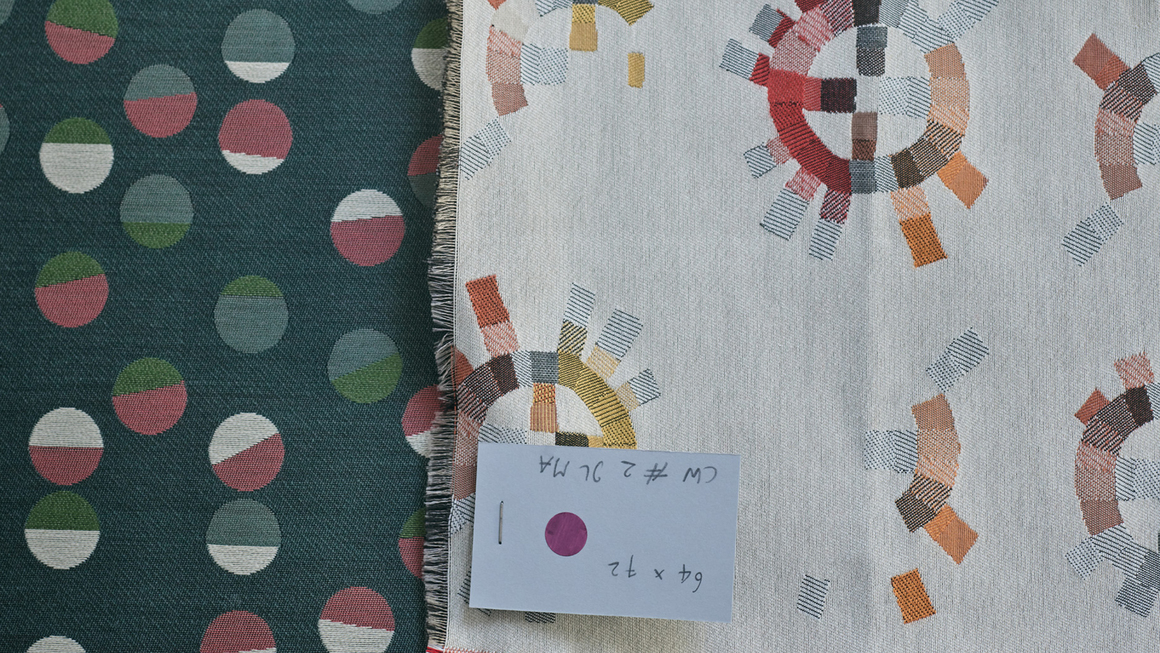
Because she demands a lot, from both herself and her commissioners, Jongerius has worked with a handful of companies that share her cultural and moral values. In 1999, she produced b-set with the Dutch craft company Koninklijke Tichelaar. Through a specialized production method, the seemingly simple tableware demonstrated the value of imperfection and uniqueness. In 2002, Jongerius worked with Maharam to produce the first commercial products that embraced her artisanal idea of individuality within serial production. For the Repeat series of textiles, the designer played with scale, collage, and screen-printed technical codes derived from jacquard punch cards. Each piece of furniture upholstered with a Repeat textile shows a different section of the overall design; just as families show both kinship and individuality between siblings, each piece is unique, yet the furniture is clearly related. “Upholstery fabric is a half-product that allows you to give a piece of furniture a new lease of life. This exemplifies what I deem important: thinking ‘Beyond the New!’”
Since the 1990s, Hella Jongerius has created substantively strong and aesthetically appealing works in various design disciplines, including textiles, ceramics, furniture, and lighting. She has also demonstrated her deep commitment and critical insights into the field and exercised her remarkable vision of the intimate relationship between people and things in numerous museum exhibitions, including the latest, with the telling title Whispering Things. Things whisper. Things tell stories. They deserve our love and care.
Louise Schouwenberg is a design theorist based in Amsterdam.
Hella Jongerius: Whispering Things, a major retrospective, is on view at Vitra Design Museum from March to September 2026 with major support from Maharam.